Pilates and yoga are no longer limited to occasional wellness classes. They have become major parts of the global fitness market and important retail opportunities for sports brands, apparel companies, and independent studios.
According to the 2025 ClassPass Look Back Report, Pilates was the platform’s most-booked workout worldwide for the third consecutive year, with reservations increasing by 66% year over year. Yoga ranked second and grew by 28%.
As participation grows, grip socks are becoming more than a functional class accessory. They can also serve as branded merchandise, membership gifts, limited-edition products, and recurring retail items.
However, effective yoga socks development and Pilates socks development involve more than adding grip dots to the bottom of an ordinary sock. Material composition, grip placement, sock structure, sizing, wash durability, branding, and production consistency must all work together.
For studios and sports brands, the right manufacturing partner can turn a simple accessory into a recognizable and commercially viable product line.

Preface: Why Yoga Socks Development and Pilates Socks Development Are Growing Priorities for Brands and Studios
Grip socks are commonly worn during Pilates, yoga, barre, stretching, and other studio-based activities. Their grip patterns are designed to improve contact between the wearer’s feet and surfaces such as mats, reformer platforms, and studio floors.
However, functionality is only one part of their value.
For a yoga or Pilates studio, branded socks can become:
- New-member welcome gifts
- Retail products displayed at reception
- Merchandise for workshops or special events
- Limited-edition collaborations
- Seasonal product launches
- Loyalty-program rewards
- A visible extension of the studio’s identity
For sports and apparel brands, grip socks can expand an activewear collection into a lower-cost accessory category that complements leggings, sports bras, tops, and other studio apparel.
A customer wearing socks with a recognizable color palette, logo, or outsole design also creates repeated brand exposure inside the studio.
Common Challenges in Yoga and Pilates Socks Development
Although grip socks may appear simple, brands frequently encounter several development challenges.
Grip Placement Does Not Match the Activity
A decorative grip pattern may look attractive in a product rendering but provide insufficient coverage in the areas that contact the floor or equipment.
Grip placement should consider:
- The ball of the foot
- The heel
- The toes
- The outer edges of the foot
- Typical movement during yoga or Pilates
- Whether the product will be used on a mat, floor, or reformer
The grip pattern must support the intended activity without making the sole unnecessarily stiff or uncomfortable.
Material Selection Affects the Wearing Experience
The yarn blend influences softness, breathability, moisture management, stretch, fit, durability, and how the sock feels after repeated washing.
A cotton-rich sock may feel familiar and comfortable, while a functional blend may provide better moisture management or odor control. The best option depends on the wearer, activity, climate, product position, and target price.
Grip Durability Can Decline After Washing
The sock material and grip compound must be compatible. If the base fabric stretches too much, has an unsuitable surface texture, or is not prepared correctly, the grip elements may crack, peel, harden, or lose adhesion after repeated use and washing.
Wash testing should therefore be part of product evaluation rather than an afterthought.
Repeated Sampling Extends the Development Timeline
Unclear specifications often lead to repeated sample revisions. Common causes include:
- Unconfirmed yarn composition
- Incomplete logo files
- Unclear grip dimensions
- Changes to sock length or opening
- Inconsistent color references
- Late packaging decisions
- Missing size specifications
A professional development discussion before sampling can identify these issues earlier and help the project move toward approval more efficiently.
Meeting the Different Needs of Studios and Sports Brands
Studios and sports brands may sell similar-looking grip socks, but their development strategies are often very different.
A studio may need a small quantity of branded products for a new location, member event, or seasonal promotion. A sports brand may be developing an entire collection with multiple sizes, colorways, and designs for long-term distribution.
PAULTEX can adjust the development model according to the buyer’s scale, product strategy, and expected launch schedule.
What Studios Need from Pilates and Yoga Socks Development
Independent Pilates and yoga studios usually place greater value on:
- Flexible production quantities
- Faster sample development
- Simple branding options
- Limited-edition colors
- Easy logo customization
- Shorter product launch cycles
- Packaging suitable for reception-area retail
- The ability to test demand before placing larger orders
For example, a studio may want to create a custom color for its anniversary, provide grip socks to members attending a special workshop, or develop a co-branded product with an instructor.
The studio may not need thousands of pairs. Instead, it needs a manufacturing model that can accommodate a focused design and a realistic initial quantity.
What Sports and Apparel Brands Need
Sports brands usually require a more structured product-development program.
Their priorities may include:
- Multiple sock styles
- Several sizes and colorways
- Consistent grip placement across sizes
- Repeatable yarn and color specifications
- Reliable bulk-production quality
- Long-term material availability
- Private-label packaging
- Stable replenishment
- Integration with a wider activewear collection
A sports brand may also develop separate products for yoga, reformer Pilates, barre, recovery, or home exercise. Each style can share a recognizable design language while using different sock structures and grip configurations.
| Development Area | Studios | Sports and Apparel Brands |
| Typical product goal | Merchandise, member gifts or limited releases | Scalable retail collection |
| Initial quantity | Smaller and more flexible | Medium to large production programs |
| Design structure | One or two focused styles | Multiple styles, sizes and colors |
| Development priority | Speed and customization | Complete collection identity |
| Branding | Studio logo and signature colors | Complete collection identity |
| Reordering | Event-based or demand-based | Scheduled replenishment |
Turn the Grip Pattern into a Brand Asset
The outsole is valuable visual space. Instead of using generic dots or lines, brands can develop grip elements in the form of:
- A company logo
- Initials or a monogram
- A slogan
- A geometric pattern
- A recognizable brand symbol
- Studio-inspired illustrations
- Custom-colored grip elements
This approach allows the sole to provide both traction and brand recognition.
During custom logo grip yoga socks development, PAULTEX can help brands evaluate the size, spacing, coverage, and repeat pattern of the grip design. Very small or highly detailed logos may need to be simplified so that the grip remains clear, durable, and practical.
The design should also be tested in different sock sizes. A grip layout developed for one size cannot always be enlarged or reduced without affecting coverage and visual balance.
PAULTEX’s own guidance for grip-sock sourcing emphasizes factors such as material compatibility, grip placement, wash durability, sizing consistency, and pre-production evaluation.
Material Selection and Custom Grip Design Are the Foundation of Successful Pilates & Yoga Socks Development
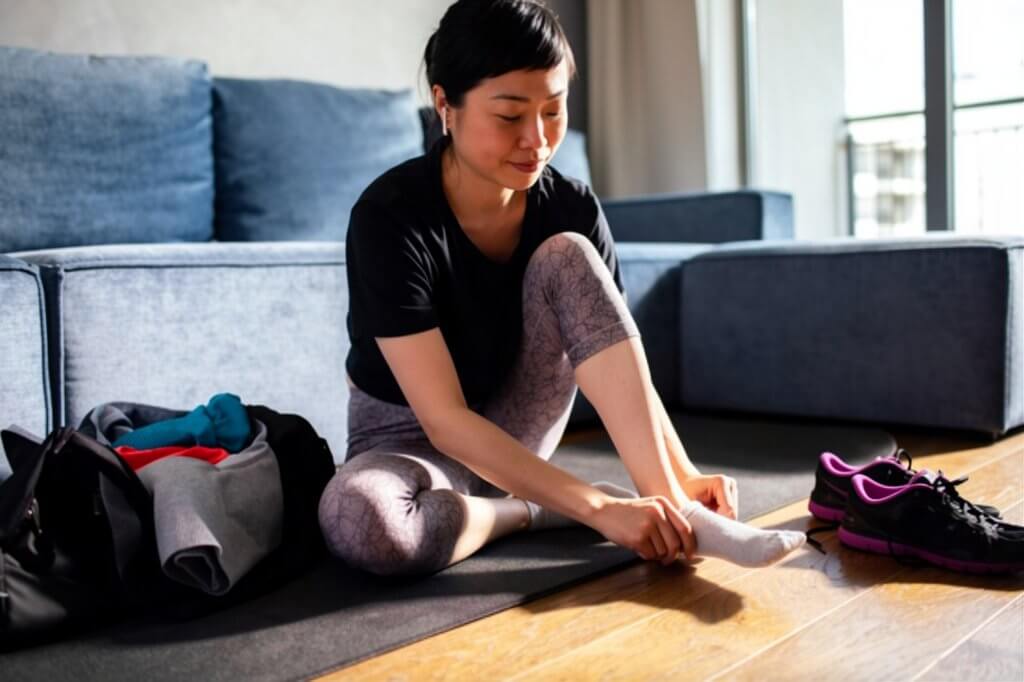
The success of Pilates socks development depends on the relationship between the sock material and the grip system.
A soft yarn alone does not guarantee a comfortable product. Likewise, a large grip pattern does not automatically deliver a better result. The materials, structure, elasticity, fit, and outsole design must be developed as one system.
Select Materials According to the Product Positioning
Possible material options include high-quality cotton, TENCEL™ fibers, nylon, polyester, deodorizing yarns, antibacterial yarns, and other functional blends.
Each material contributes different characteristics.
High-Quality Cotton
Cotton can provide:
- A familiar hand feel
- Softness
- Everyday comfort
- Natural-looking texture
- Strong compatibility with lifestyle branding
However, the complete blend should account for stretch recovery, moisture management, durability, and the intended intensity of use.
TENCEL™ Fibers
TENCEL™ Lyocell and Modal fibers are made from wood-based cellulose. Lenzing states that these fibers provide a soft and smooth feel, while supporting moisture control and a naturally dry wearing experience. TENCEL™ Modal is also designed to retain fabric softness through repeated washing.
These characteristics can make TENCEL™ blends relevant to grip socks positioned around:
- Softness
- Skin comfort
- Breathability
- Moisture management
- Premium lifestyle appeal
The final performance still depends on the complete yarn blend, knitting structure, finishing, and product construction.
Moisture-Wicking and Quick-Dry Yarns
Moisture-management yarns may be suitable for hot yoga, intensive Pilates sessions, and warm studio environments.
They can help move moisture away from the skin and support a drier wearing experience. The yarn should be coordinated with breathable knitting zones to avoid creating a sock that feels overly dense or warm.
Odor-Control and Antibacterial Yarns
Grip socks are worn close to the skin and may be used during repeated exercise sessions. Odor-control and antibacterial yarn options can therefore support activewear and studio-product positioning.
Any antibacterial, deodorizing, or performance claim should be supported by the relevant yarn documentation or finished-product testing. Brands should avoid making claims that are broader than the available evidence.
Use Blended Materials to Balance Performance
The objective is not always to select one primary material. A carefully developed blend can provide a better balance of:
Softness × Breathability × Moisture Management × Stretch × Durability
For example, a soft cellulosic or cotton-based yarn may be combined with durable synthetic fibers and elastic yarns to improve fit and shape retention.
The correct blend depends on:
- Target retail price
- Intended activity
- Wearing duration
- Climate
- Product thickness
- Required stretch
- Brand sustainability goals
- Washing instructions
- Desired hand feel
Design the Sock Structure Around Movement
Material selection must be supported by an appropriate knitting structure.
Useful structural options may include:
- Mesh ventilation zones
- Arch bands
- Ribbed cuffs
- Cross straps
- Ankle-length constructions
- Low-cut silhouettes
- Full-toe or open-toe designs
- Reinforced heels and toes
- Seamless or low-profile toe areas
- Terry cushioning
- Left-and-right foot shaping
A Pilates sock designed for reformer classes may need a secure fit and strategically placed grip coverage. A yoga sock may prioritize flexibility and a barefoot-like sensation. A lifestyle product may emphasize softness, visual design, and all-day comfort.
Develop Grip and Base Material Together
The grip compound must bond effectively with the knitted sock surface. Important variables include:
- Yarn composition
- Surface texture
- Fabric stretch
- Grip thickness
- Grip spacing
- Application temperature
- Curing conditions
- Washing method
- Expected product lifespan
A large amount of grip material can make the sole feel stiff. Too little may result in limited floor contact. Grip elements that are too close together may reduce flexibility, while elements placed too far apart may create inconsistent coverage.
The design should be evaluated in both static and moving positions.
Test More Than the Appearance
Before approving a sample, brands should review:
- Grip coverage
- Grip adhesion
- Flexibility
- Sock rotation during movement
- Heel positioning
- Toe comfort
- Cuff pressure
- Strap stability
- Moisture and heat buildup
- Logo clarity
- Color accuracy
- Results after washing
A sample that looks correct in product photography may still require structural changes after being worn during an actual class.
How Bulk Pilates Socks Development Works: From Sample Evaluation to Mass Production
A clear process helps reduce unnecessary sampling, prevent specification errors, and maintain consistency when moving into mass production.
PAULTEX’s development process covers product positioning, artwork, material and structural selection, packaging, sampling, approval, payment, shipping, and manufacturing.
Step 1: Set the Design Direction
The brand first defines the intended product concept.
PAULTEX can review:
- An existing brand sample
- A reference product
- Competitor examples
- A mood board
- Logo files
- Product sketches
- Color references
- A complete Tech Pack
Reference products can help communicate the preferred length, thickness, opening, strap structure, grip coverage, and general wearing experience. However, the final product should be adjusted to create a differentiated result rather than simply duplicating an existing item.
The initial brief should also identify:
- Intended user
- Yoga, Pilates, barre, or multipurpose use
- Studio or retail positioning
- Target price
- Required sizes
- Preferred colors
- Functional requirements
- Packaging format
- Expected order quantity
Step 2: Confirm Materials and Structure
After defining the concept, the brand and manufacturer confirm:
- Yarn composition
- Functional yarn options
- Sock silhouette
- Size specifications
- Strap design
- Ventilation zones
- Cushioning
- Grip placement
- Grip color
- Logo application
- Packaging requirements
This is also the stage to discuss how the product will be washed and used. Grip durability cannot be evaluated separately from the intended care method.
Step 3: Develop and Evaluate the Sample
The initial sample translates the digital design and technical discussion into a physical product.
Professional preparation before sampling can reduce avoidable revisions. However, development should still allow room for adjustments based on actual wear testing.
Brands should evaluate the sample during the activity for which it was designed. A reformer Pilates product should be tested on reformer equipment, while yoga socks should be assessed on the relevant studio flooring or mat surface.
Potential revisions may include:
- Increasing or reducing grip coverage
- Adjusting the sock opening
- Improving strap tension
- Changing the yarn blend
- Modifying the arch band
- Relocating the logo
- Refining the size
- Adjusting grip thickness
- Correcting packaging information
The approved sample should become the reference for bulk production.
Step 4: Prepare for Mass Production
Before production begins, both parties should confirm:
- Final quantities
- Size breakdown
- Color breakdown
- Packaging quantities
- Artwork versions
- Label information
- Shipping method
- Delivery destination
- Payment terms
- Production schedule
For products sold in the United States, the Federal Trade Commission states that most textile products must disclose fiber content, country of origin, and the identity of the manufacturer or another responsible business. Apparel products may also be subject to care-labeling requirements. Review the FTC’s textile-labeling guidance.
Brands should review the labeling and product requirements of every market in which the socks will be sold.
PAULTEX states that its typical manufacturing lead time is approximately 30–60 days, depending on production capacity and yarn readiness.
Flexible Customization Models and MOQ
PAULTEX provides several cooperation models to support different stages of business development.
Full Customized
The brand provides an original design, artwork, reference sample, or Tech Pack.
Customization may cover:
- Yarn composition
- Sock structure
- Grip pattern
- Custom colors
- Logo placement
- Size range
- Functional features
- Private-label packaging
Indicative MOQ: approximately 300–1,800 pairs, depending on the style.
This model is suitable for brands seeking a distinctive, market-ready product rather than a basic logo modification.
Semi-Customize
The brand selects an existing structure and customizes elements such as the logo, color, grip pattern, or packaging.
Indicative MOQ: approximately 300–600 pairs, depending on the style.
This option can reduce development complexity while still creating a recognizable branded product.
Our Design
Brands and studios can select from PAULTEX-developed products with:
- Lower MOQ options
- Faster delivery
- Reduced development requirements
- Greater suitability for market testing
This model may be appropriate for a studio launching its first retail accessory or a brand evaluating customer demand before committing to a fully customized collection.
All MOQs should be confirmed according to the design, material, number of colors, size range, packaging, and current production conditions.
5. Taiwan’s Supply Chain Is the Right Partner for Pilates & Yoga Socks Development
China, Turkey, Taiwan, and other textile-manufacturing markets can each support different sourcing needs. The most important consideration is not the country alone, but whether the factory’s operating model matches the brand’s development strategy.
Large-scale factories may be highly efficient when producing standardized designs in substantial quantities. However, emerging brands and independent studios often need something different:
- More material choices
- Smaller initial orders
- Faster communication
- Greater willingness to modify structures
- Support during early product development
- Specialty yarn sourcing
- Flexible yarn-blend ratios
- Customized grip applications
- Multiple sampling options
- Product differentiation rather than basic replication
Taiwan’s textile supply chain is particularly relevant when a project requires functional fibers, technical knitting, specialized materials, or closer coordination between yarn and finished-product development.
Greater Flexibility in Specialty Yarn Selection
A differentiated grip sock may combine several yarns to create the desired balance of softness, moisture management, odor control, elasticity, and durability.
A development-oriented supply chain can help brands compare different options instead of limiting the project to a small selection of standardized yarns.
More Flexibility in Material Ratios
Changing a yarn blend can affect:
- Hand feel
- Stretch
- Thickness
- Moisture behavior
- Shape retention
- Grip adhesion
- Production cost
For premium or function-focused products, the ability to adjust the material ratio can create a more precise result.
More Flexibility in Sock Structure
Emerging yoga and Pilates brands may want products that differ from common market designs.
Potential points of differentiation include:
- Original strap configurations
- Open-top silhouettes
- Asymmetrical patterns
- Custom ventilation zones
- Targeted cushioning
- Distinct cuff heights
- Left-and-right foot designs
- Branded outsole grip patterns
A non-standardized development model gives brands more room to explore these features.
A Better Fit for Emerging Brands and Independent Studios
An emerging brand may not yet have a complete technical team. A small studio may have a clear creative idea but limited manufacturing experience.
In these situations, the supplier must do more than accept a purchase order. It should help clarify the concept, identify technical constraints, recommend materials, and prepare the design for production.
PAULTEX positions itself as a boutique hosiery partner that supports special yarn sourcing, product customization, and international brand development from Taiwan. Its production capabilities include multiple knitting-machine specifications, allowing greater flexibility across different thicknesses and constructions.
Ready to Partner with PAULTEX to Develop Custom Pilates & Yoga Socks?
Successful yoga socks development begins with understanding how the product will be used. Successful Pilates socks development requires the manufacturer to translate that use scenario into the right combination of yarn, structure, fit, grip placement, and branding.
Founded in 1998, PAULTEX has more than 20 years of hosiery-manufacturing experience. Its machine range includes 52N, 96N, 120N, 144N, 168N, and 200N knitting specifications, supporting different yarn weights, design details, and product structures.
PAULTEX can provide customized support for:
- Material and functional-yarn selection
- TENCEL™, cotton, odor-control, and antibacterial yarn blends
- Sock-shape and strap development
- Grip coverage and placement
- Custom-logo grip patterns
- Brand colors and visual identity
- Size planning
- Sampling and product refinement
- Private-label packaging
- Flexible MOQ programs
- Bulk manufacturing and international shipment
For studios, this flexibility can support limited editions, member gifts, events, and initial retail launches.
For sports and apparel brands, PAULTEX can help build a scalable product collection with consistent specifications, multiple sizes, custom colorways, and long-term production planning.
The result is not simply a pair of socks with a logo. It is a product developed around the brand’s users, visual identity, commercial goals, and intended movement experience.
FAQ
What manufacturers offer custom logo grip yoga sock development for sports brands?
PAULTEX offers custom logo grip yoga socks development for sports brands, activewear companies, Pilates studios, yoga studios, and other private-label buyers.
The customization process can include:
- Custom outsole logos
- Original grip patterns
- Brand-specific grip colors
- Functional yarns
- Custom sock structures
- Multiple sizes and colorways
- Private-label packaging
- Sampling and bulk production
Brands can choose full customization, semi-customization, or existing PAULTEX designs according to their budget, order quantity, timeline, and desired level of differentiation.
When selecting a manufacturer, sports brands should confirm that the supplier can evaluate grip placement, material compatibility, size consistency, wash durability, and production repeatability—not only reproduce an artwork file.
What materials are commonly used in yoga sock development for comfort and odor control?
Materials used in yoga socks development may include:
- High-quality cotton
- TENCEL™ Lyocell or Modal fibers
- Nylon
- Polyester
- Moisture-wicking yarns
- Quick-dry yarns
- Deodorizing yarns
- Antibacterial yarns
- Elastic fibers
Cotton and TENCEL™ blends may support softness and skin comfort, while synthetic and elastic yarns can contribute durability, stretch, and shape retention. Moisture-management, deodorizing, or antibacterial yarns can be added according to the intended use and product positioning.
The best construction usually combines several fibers rather than relying on a single material. The blend should be evaluated together with the sock structure, grip compound, washing method, and expected wearing environment.
Ready to turn your grip-sock concept into a production-ready product? Contact PAULTEX to discuss your design, logo, material requirements, MOQ, sampling plan, and launch timeline.